Most penetration tests still start from zero, treating the tester like an outsider probing walls from the street. White box penetration testing throws that assumption out. Testers get the source code, architecture diagrams, and credentials before day one, so they test like someone who already has the keys.
This guide breaks down what white box testing actually involves, how it stacks up against grey and black box methods, the step-by-step process teams follow, the tools involved, and what to look for in a testing partner — including one built for AI-integrated stacks.
Key Takeaways
- White box testing gives testers full source code, credentials, and architecture access before testing starts
- Catches business logic flaws, hardcoded secrets, and code-level bugs black box scans routinely miss
- Grey and black box methods trade that depth for speed and external-attacker realism
- Strong results depend on tight scoping, dependency mapping, static plus dynamic analysis, and prioritized fixes
- LLMs, RAG pipelines, and agents need the same full-access review plus AI-specific attack methods
What Is White Box Penetration Testing?
White box penetration testing, sometimes called clear-box or glass-box testing, hands testers everything: source code, architecture documentation, credentials, and network topology, all before the engagement begins. NIST describes this approach as direct analysis of application source code, a sharp contrast to black-box methods that only analyze the compiled, running application with no code visibility.
Think of it as simulating a malicious insider or a compromised privileged account, not a random attacker knocking on the front door. That perspective matters because insiders don't guess. They trace logic paths that rarely get exercised and follow dependencies most external attackers never see.
What White Box Testing Uniquely Uncovers
Because testers can read the code instead of inferring behavior from outputs, white box engagements surface issues black-box scanning tends to miss entirely:
- Business logic flaws: workflow bypasses, race conditions, and broken state transitions
- Hardcoded secrets and misconfigurations: API keys, credentials, or debug flags left in code
- Code-level weaknesses: unsafe functions, cryptographic errors, and improper input validation
What Gets Shared Before Testing Starts
A proper white box engagement typically involves handing over:
- Full source code and dependency lists
- Architecture and data-flow diagrams
- Test or staging credentials across privilege levels
- API and database schemas
- Network diagrams and firewall policies
- Documentation of existing security controls
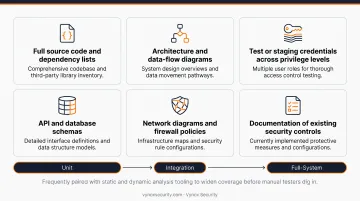
White box testing can be scoped at the unit, integration, or full-system level. It's frequently paired with static and dynamic analysis tooling to widen coverage before manual testers dig in.
White Box vs. Grey Box vs. Black Box Penetration Testing
Which approach you pick depends on the question you need answered—not on a universal ranking of "best."
White Box vs. Grey Box Penetration Testing
Grey box testing gives testers partial knowledge: maybe a set of limited-privilege credentials, or some architecture documentation, but not full source code. NIST notes that grey-box testing effectively blends white- and black-box techniques, giving testers some internal context while still preserving elements of attacker-style discovery.
That blend works well for many engagements. But grey box testing still misses the deep logic flaws that only full source disclosure reveals, the kind buried three function calls deep in a payment workflow. For compliance-critical or high-stakes applications, that gap is often too costly to leave open.
White Box vs. Black Box Penetration Testing
Black box testing starts with zero internal knowledge. Testers behave like real external attackers, probing the deployed system with no map.
That approach is useful for validating perimeter defenses and observable attack surface. The tradeoff is time: without source visibility, testers can spend most of an engagement figuring out how the system works before they can meaningfully attack it.
Side by side, the three approaches differ most on knowledge, depth, and where you spend the engagement clock:
| Dimension | White Box | Grey Box | Black Box |
|---|---|---|---|
| Knowledge level | Full — source code, credentials, architecture | Partial — limited credentials or docs | None — external attacker view only |
| Perspective | Insider or compromised privileged account | Semi-authenticated user | Outside attacker |
| Depth of analysis | Deepest — code-level and logic flaws | Moderate — some logic, some blind spots | Shallow on logic, strong on exposed surface |
| Time efficiency | High — skips most recon | Medium | Lower — recon-heavy |
| Typical use case | Compliance-driven, critical apps, AI/LLM code review | Authenticated app testing, internal tools | Perimeter and external attack simulation |
Benefits and Challenges of White Box Penetration Testing
Full disclosure isn't automatically better in every scenario. It's a trade-off, and it pays to understand both sides before scoping an engagement.
Key Benefits
Deeper coverage of what actually causes breaches. Veracode's 2024 State of Software Security report found that only 35% of applications managed to sustain a clean record of eliminating critical security debt.
Source-level review is one of the few methods that catch that debt before it compounds. OWASP specifically calls out concurrency issues, access-control flaws, and cryptographic weaknesses as defects code-level review is uniquely positioned to find.
Other advantages stack up quickly:
- Faster time-to-finding: testers skip most reconnaissance since access is handed over upfront
- Earlier SDLC applicability: flaws get caught before code ever reaches production
- Traceable root causes: findings point to the exact file and function, not just a symptom
Common Challenges
White box testing demands more from the people running it, and it comes with real operational risk if scoping is loose.
- High expertise requirement: OWASP's Secure Code Review guidance stresses human judgment and context, not just scanning tools
- Data overload: full disclosure means sifting large volumes of code and docs, which can bury critical findings without prioritized reporting
- Production-impact risk: active exploitation against live systems can cause real disruption if not sandboxed properly
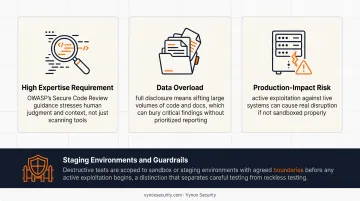
That last point is why staging environments and pre-agreed guardrails matter so much. Vynox Security, for instance, scopes destructive tests to sandbox or staging environments with agreed boundaries before any active exploitation begins — a distinction that separates careful testing from reckless testing.
How to Execute a White Box Penetration Test: Step-by-Step
A white box engagement moves through five stages, each building on the access and findings from the last.
Step 1: Scoping and Information Gathering
Everything starts with defining what actually matters. Testers and clients jointly identify business-critical workflows such as authentication, payment processing, and third-party integrations.
Before testing begins, they collect:
- Source code and architecture docs
- Credentials and access paths
- Dependency lists
Step 2: Attack Surface and Dependency Mapping
Next, testers map every endpoint, API, and third-party dependency in the system. This step catches "shadow assets" that never appear in architecture diagrams but show up in an attacker's toolkit: forgotten staging endpoints, undocumented APIs, and outdated libraries.
Step 3: Static and Dynamic Code Analysis
Testers run static analysis (SAST) against the source code to catch structural issues, then pair it with dynamic analysis (DAST) against a live build to observe actual runtime behavior. Neither tool alone tells the whole story; together they narrow down where manual review should focus.
Step 4: Active Exploitation and Business Logic Testing
Using architecture docs and code access, testers go straight for the workflows most likely to break under pressure rather than guessing. Typical targets include privilege escalation, session and token manipulation, and logic-path abuse.
Step 5: Risk Prioritization, Reporting, and Remediation
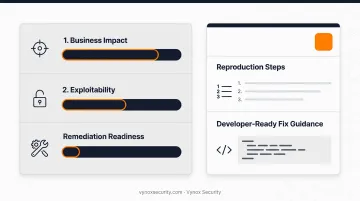
Testers score findings by business impact, exploitability, and remediation readiness. Strong reports go beyond a vulnerability list. They include reproduction steps and developer-ready fix guidance so engineering teams can act without a translator.
Tools and Techniques Used in White Box Testing
Automation supports white box testing, but it doesn't replace manual logic review.
Code Coverage Techniques
To make sure testing actually exercises the application's logic, not just the easy paths, testers lean on established coverage criteria. According to ISTQB's Certified Tester Foundation Level syllabus:
- Statement coverage — every executable statement runs at least once (100% still can miss untested decision branches)
- Branch/decision coverage — every branch executes; includes statement coverage but still misses some defects
- Path coverage — designed to exercise distinct paths through the application's control-flow graph
Common Tooling
These tools appear often in white box engagements:
- Nmap for asset and service discovery
- Static and dynamic analyzers for structural and behavioral vulnerability scanning
- Wireshark for inspecting live network traffic
- Metasploit for validating and safely exploiting confirmed vulnerabilities
None of these tools, on their own, makes a test "white box." What defines the methodology is the disclosed knowledge and the tester's perspective. The tools just help execute it faster.
Choosing the Right White Box Penetration Testing Partner
Modern software stacks have moved past traditional infrastructure. LLMs, RAG pipelines, and autonomous agents now sit alongside standard code, and they carry their own attack surface: one legacy pentest firms weren't built to test.
When evaluating a partner, look past generic scan output and check for:
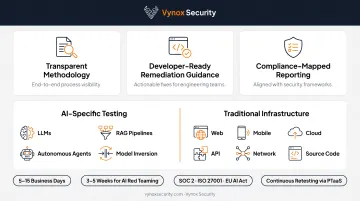
- Transparent methodology: can they explain exactly what gets tested and how, not just hand you a scanner report
- Developer-ready remediation guidance: findings with file/line references and reproduction steps, not boilerplate CVE advice
- Compliance-mapped reporting: evidence structured for SOC 2, ISO 27001, or similar frameworks, not just a severity list
Vynox Security applies this model across two layers: AI-specific testing (LLMs, RAG pipelines, autonomous agents, model inversion) and traditional infrastructure (web, mobile, cloud, API, network, source code).
For AI systems, that means reviewing prompt construction at the code level, tracing RAG retrieval and access-control logic, and mapping agent tool-call definitions for privilege escalation paths. Engagements run 5–15 business days (3–5 weeks for full AI red teaming), with findings mapped to SOC 2, ISO 27001, and the EU AI Act. Continuous retesting is available through a PTaaS model aligned to sprints and model updates.
Frequently Asked Questions
What is a white box penetration test?
A full-knowledge security assessment where testers receive source code, credentials, and architecture documentation before testing begins. Unlike black box testing, which starts from zero visibility, white box testing traces vulnerabilities directly to the code causing them.
What is the difference between white box and grey box penetration testing?
White box gives testers complete pre-engagement knowledge, while grey box provides only partial access, such as limited credentials or select documentation. Grey box still misses many deep logic flaws that full disclosure reveals.
What is the difference between white box and black box penetration testing?
Black box testers start with zero internal knowledge and mimic an external attacker, while white box testers get full source code and architecture access upfront. Black box better simulates real-world perimeter attacks; white box goes deeper into code-level logic.
How long does a white box penetration test take?
Most standard engagements run 5–15 business days, since testers skip the bulk of reconnaissance that black box testing requires. More specialized work, like full AI red teaming, can extend to 3–5 weeks depending on scope.
What tools are commonly used in white box penetration testing?
SAST and DAST tools handle structural and behavioral analysis, Nmap supports asset discovery, Wireshark inspects network traffic, and Metasploit validates exploitability. None of these tools alone defines the methodology. Manual logic review does.
Is white box penetration testing suitable for AI systems like LLMs?
Yes. Reviewing prompt handling, RAG pipeline code, and agent logic requires the same full-access approach, extended with AI-specific methods like prompt injection testing, vector database review, and agent privilege-escalation mapping.